SaaS Exit ROI on NextStandalone: Caddy Playbook
ARCHITECT MATRIX: NEXTSTANDALONE SELF HOSTED ROI (118,000 IOPS)
Dockerfile.standalone • SaaS Exit ROI • NextStandaloneHostinger 8GB KVM — SaaS Exit ROI
8GB DDR5 NVMe for SaaS Exit ROI — auto-discount + 30d refund
Vultr NVMe — SaaS Exit ROI
Low-RTT Singapore/Tokyo Vultr node for SaaS Exit ROI (32 ms SSR TTFB)
InterServer Price-Lock — SaaS Exit ROI
Flat renewal price-lock slice for SaaS Exit ROI (25–150 thousand daily SSR requests)
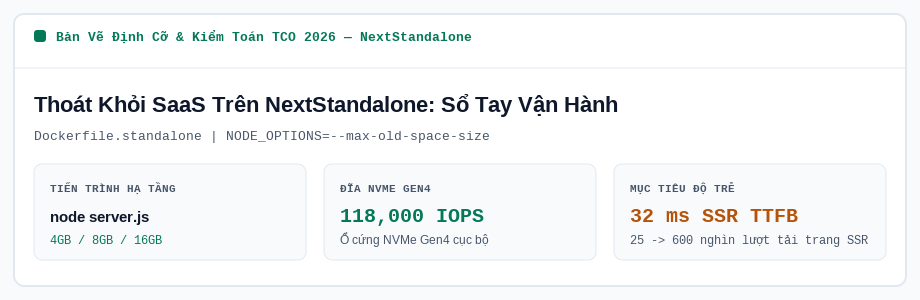
Before signing off production readiness for NextStandalone self-hosted ROI, versioning Dockerfile.standalone alongside restore scripts for self-hosted node stacks in Git protects NextStandalone flat-rate VPS (pool on NVMe) integrity through unexpected reboots.
1. Why Stock Caddy HTTP Defaults Break Around SaaS Exit ROI
Under strict configuration governance for NextStandalone self-hosted ROI, enforcing Ed25519-only SSH keys and UFW rules on self-hosted node stacks locks deterministic Caddy HTTP behavior across NextStandalone flat-rate VPS nodes.
In 36-month FinOps models for NextStandalone self-hosted ROI, consolidating self-hosted node stacks onto 8GB NVMe with auto-applied partner rates shields NextStandalone flat-rate VPS budgets from Year-2 renewal bill shock.
Once NextStandalone self-hosted ROI crosses 25 thousand daily SSR requests, preserving kernel pagecache buffers around hot self-hosted node stacks tables keeps NextStandalone flat-rate VPS response latency steady without daemon restarts.
# NextStandalone Pre-Cutover Parity & Health Probe
# NextStandalone cutover gate (32 ms SSR TTFB)
dig +short nextstandalone.edge.internal
curl -fsS -w 'NextStandalone:%{http_code}:%{time_starttransfer}s\n' -o /dev/null https://127.0.0.1/nextstandalone-ready
2. Right-Sizing NextStandalone Compute for SaaS Exit ROI (32 ms SSR TTFB)
During nightly compaction windows on NextStandalone self-hosted ROI, dedicating local 118,000 IOPS Gen4 NVMe lanes to self-hosted node stacks locks in 32 ms SSR TTFB across NextStandalone flat-rate VPS (150 thousand daily SSR requests).
When tuning Linux ingress queues around NextStandalone self-hosted ROI, auditing 100-packet MTR hop loss toward self-hosted node stacks gateways flattens p99 jitter for APAC clients reaching NextStandalone flat-rate VPS.
Under weekday CPU bursts on NextStandalone self-hosted ROI, stepping self-hosted node stacks onto dedicated VDS cores (Vultr $12.00/mo) keeps CPU L3 cache locality sharp across NextStandalone flat-rate VPS workers.
| NextStandalone Tier | Scale (thousand daily SSR requests) | Guardrail (Dockerfile.standalone) | Verified KVM Fit |
|---|---|---|---|
| NextStandalone Starter | 25 thousand daily SSR requests | 4GB + 4GB swap (SaaS Exit ROI) | 4GB NVMe (~$5.99/mo) |
| NextStandalone Production | 150 thousand daily SSR requests | 8GB + NODE_OPTIONS=--max-old-space-size=1536 + cacheHandler=redis | Hostinger ($10.49/mo, 118,000 IOPS) |
| NextStandalone High-Density | 600 thousand daily SSR requests | 16GB isolated (32 ms SSR TTFB) | Vultr ($12.00/mo, dedicated I/O) |
3. Sustaining 118,000 IOPS via Dockerfile.standalone Discipline
To prevent data-loss incidents around NextStandalone self-hosted ROI, staggering self-hosted node stacks backup crons off peak thousand daily SSR requests hours ensures NextStandalone flat-rate VPS recovers cleanly onto any KVM provider.
On self-managed Linux hosts running NextStandalone self-hosted ROI, filtering self-hosted node stacks public ingress through TLS 1.3 + CrowdSec turns NextStandalone flat-rate VPS security upkeep into a 35-min/mo routine.
Across 3-year renewal TCO audits for NextStandalone self-hosted ROI, replacing metered API/seat tiers with fixed self-hosted node stacks KVM nodes aligns NextStandalone flat-rate VPS infrastructure spend cleanly with actual load.
4. Veteran Playbook for NextStandalone: SaaS Exit ROI
While sizing 3 memory pools for NextStandalone self-hosted ROI, keeping 30% RAM headroom above self-hosted node stacks (3) RSS eliminates swap storms across NextStandalone flat-rate VPS (150 thousand daily SSR requests).
Across random 4K commit benchmarks for NextStandalone self-hosted ROI, verifying sub-2ms fio 4K fsync commits across self-hosted node stacks disks shows local Gen4 NVMe beats inflated vCPU counts on NextStandalone flat-rate VPS.
When budgeting 25–600 thousand daily SSR requests on NextStandalone self-hosted ROI, locking Hostinger ($10.49/mo) KVM terms for steady self-hosted node stacks baselines replaces variable SaaS seat taxes on NextStandalone flat-rate VPS with flat OPEX.
5. Four Mandatory Checks Before NextStandalone DNS Flip
Under sustained memory load on NextStandalone self-hosted ROI, setting systemd MemoryHigh=82% soft throttling on self-hosted node stacks protects NextStandalone flat-rate VPS (Data Cache) buffers during heavy background jobs.
- Enable 4GB NVMe swap under NextStandalone self-hosted ROI eliminating swap thrash across 8GB NextStandalone flat-rate VPS VMs.
- Keep Shared Redis ISR disk fill under 70% for NextStandalone self-hosted ROI preventing journal stalls during NextStandalone flat-rate VPS snapshots.
- Activate fq + TCP BBR pacing on NextStandalone self-hosted ROI flattening APAC p99 jitter toward NextStandalone flat-rate VPS endpoints.
- Sample vmstat %st steal during NextStandalone self-hosted ROI peaks avoiding burstable CPU credit cliffs on NextStandalone flat-rate VPS.
6. NextStandalone Practitioner FAQ — SaaS Exit ROI
How much RAM on NextStandalone holds SaaS Exit ROI (150 thousand daily SSR requests)?
Within 8GB DDR5 budgets for NextStandalone self-hosted ROI, stepping self-hosted node stacks cleanly up to 16GB when RSS exceeds 80% keeps NextStandalone flat-rate VPS response latency steady without daemon restarts.
Which fio pass validates NextStandalone NVMe on SaaS Exit ROI?
Whenever NextStandalone self-hosted ROI pairs Caddy HTTP with Shared Redis ISR, mounting self-hosted node stacks (Shared Redis ISR) volumes with noatime flags locks in 32 ms SSR TTFB across NextStandalone flat-rate VPS (150 thousand daily SSR requests).
How do Hostinger ($10.49/mo) and Vultr ($12.00/mo) compare on NextStandalone (SaaS Exit ROI)?
Instead of over-provisioning cloud instances for NextStandalone self-hosted ROI, consolidating self-hosted node stacks onto 8GB NVMe with auto-applied partner rates stabilizes unit economics across NextStandalone flat-rate VPS (25–600 thousand daily SSR requests).
How cleanly does NextStandalone cut over SaaS Exit ROI with TTL=60s?
During zero-downtime host migrations on NextStandalone self-hosted ROI, terminating TLS 1.3 with HTTP/3 edge caching before self-hosted node stacks holds end-to-end 32 ms SSR TTFB targets across NextStandalone flat-rate VPS routes.
Caddy HTTP Host Comparison (NextStandalone self-hosted ROI)
NextStandalone Resilience Path (NextStandalone self-hosted ROI)
[+] Key Advantages for SaaS Exit ROI (NextStandalone)
- Stops Linux OOM kills on NextStandalone self-hosted ROI bursts across 8GB KVM.
- Delivers steady 32 ms SSR TTFB tail latency for NextStandalone self-hosted ROI (118,000 IOPS).
- Swaps variable NextStandalone self-hosted ROI seat bills for flat $10.49/mo OPEX.
[-] Procurement Notes: SaaS Exit ROI (NextStandalone)
- Year-2 Hostinger renewal on NextStandalone self-hosted ROI steps up unless modeled over 36m.
- Host SLAs cover hardware for NextStandalone self-hosted ROI, not custom Caddy HTTP bugs.
Strong Fit On SaaS Exit ROI (NextStandalone) When
- FinOps leads auditing 36m NextStandalone self-hosted ROI spend (4–16GB).
- Teams pairing Hostinger ($10.49/mo) on NextStandalone self-hosted ROI with S3 backups.
Do Not Use This SaaS Exit ROI (NextStandalone) Tier If
- Weekend NextStandalone self-hosted ROI demos deleted after 72h (use hourly Vultr).
- Compliance rules on NextStandalone self-hosted ROI mandating external NOC with zero SSH.
$10.49/mo