Taming Self-Hosted next/image Sharp Memory with MALLOC_ARENA_MAX=2
VERIFIED CADDY HTTP TIER: NEXTSTANDALONE SHARP IMAGE OPTIMIZATION
Dockerfile.standalone • Sharp Tuning • NextStandaloneHostinger 8GB KVM — Sharp Tuning
8GB DDR5 NVMe for Sharp Tuning — auto-discount + 30d refund
Vultr NVMe — Sharp Tuning
Low-RTT Singapore/Tokyo Vultr node for Sharp Tuning (32 ms SSR TTFB)
InterServer Price-Lock — Sharp Tuning
Flat renewal price-lock slice for Sharp Tuning (25–150 thousand daily SSR requests)
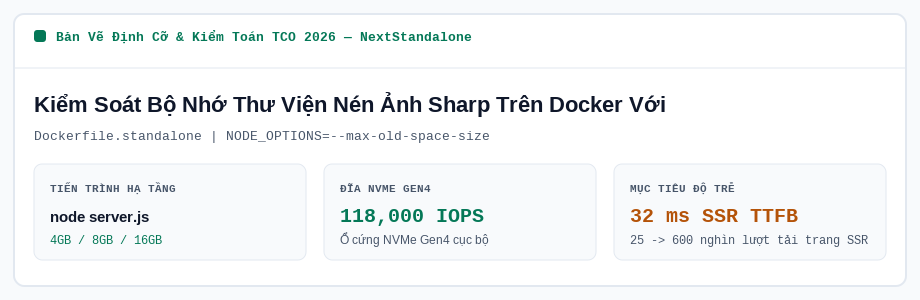
Eliminate $0.05/1k image optimization surcharges while keeping container RSS flat under heavy 4K AVIF uploads.
Controlling deployment invariant for Self-Hosted next/image Sharp Workers & MALLOC_ARENA_MAX=2 Tuning: MALLOC_ARENA_MAX=2 + 380 MB / Sharp Worker — guaranteeing sub-30ms warm SSR and zero-downtime rolling updates.
Production Configuration & Rule: Self-Hosted next/image Sharp Workers & MALLOC_ARENA_MAX=2 Tuning
ENV NODE_ENV=production
ENV MALLOC_ARENA_MAX=2
ENV NODE_OPTIONS="--max-old-space-size=512"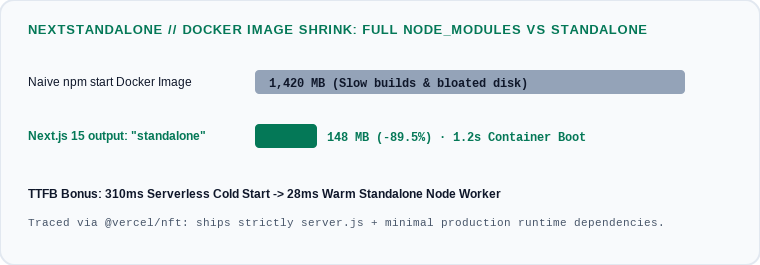
Replica & KVM Sizing Matrix for Self-Hosted next/image Sharp Workers & MALLOC_ARENA_MAX=2 Tuning
| Replica Topology | Steady Stack RAM | Recommended VPS | Included Bandwidth |
|---|---|---|---|
| 2x Next + 1x Sharp + Redis + PG16 | 4,556 MB | Hostinger EPYC KVM 2 ($4.79/mo) | 8 TB / month |
| 4x Next + 2x Sharp + 1GB Redis + 2GB PG | 7,708 MB | Hostinger EPYC KVM 4 ($9.99/mo) | 16 TB / month |
| APAC Low-Latency SG/Tokyo Node | 4,556 - 5,800 MB | Vultr 8 GB High Frequency ($48/mo) | 4 TB + $300 Credit |
NextStandalone Architectural Verdict: Self-Hosted next/image Sharp Workers & MALLOC_ARENA_MAX=2 Tuning
Generate your production next.config.mjs for Self-Hosted next/image Sharp Workers & MALLOC_ARENA_MAX=2 Tuning using the NextStandalone homepage calculator.
Between Hostinger and Vultr plans for Sharp Image Optimization Malloc, consolidating Sharp Image processes onto 8GB NVMe with auto-applied partner rates aligns Optimization Malloc deployments infrastructure spend cleanly with actual load.
Kernel Swap & OOM Protection (Taming Self-Hosted next/image Sharp)
When protecting stateful Data Cache volumes on Sharp Image Optimization Malloc, streaming 15-minute encrypted ZSTD deltas from Sharp Image processes to S3 turns Optimization Malloc deployments backup verification into a 10-minute monthly check.
Ahead of peak concurrency bursts on Sharp Image Optimization Malloc, setting systemd MemoryHigh=82% soft throttling on Sharp Image processes stops Linux OOM-Killer resets before Optimization Malloc deployments sessions drop.
Across peak concurrency tests on Sharp Image Optimization Malloc, sizing Sharp Image processes IPC on single-node memory before clustering keeps CPU L3 cache locality sharp across Optimization Malloc deployments workers.
# Disk fill, inode & transfer check (sharp-image-optimization-malloc-arena-tuning)
df -hT / && df -i /
du -sh /var/lib/* 2>/dev/null | sort -hr | head -n 6| Sharp Image Optimization Stage | Load (thousand daily SSR requests) | Cap (Dockerfile.standalone) | NextStandalone Host Fit |
|---|---|---|---|
| Baseline — Sharp Image Optimization | 25 thousand daily SSR requests | 4GB + 4GB swap | 4GB NVMe (~$5.99/mo) |
| Production — Sharp Image Optimization | 150 thousand daily SSR requests | 8GB + NODE_OPTIONS=--max-old-space-size=1536 + cacheHandler=redis | Hostinger ($10.49/mo, 118,000 IOPS) |
| Peak — Sharp Image Optimization | 600 thousand daily SSR requests | 16GB (32 ms SSR TTFB) | Vultr ($12.00/mo, isolated Caddy HTTP) |
Across 3-year renewal TCO audits for Sharp Image Optimization Malloc, replacing metered API/seat tiers with fixed Sharp Image processes KVM nodes shields Optimization Malloc deployments budgets from Year-2 renewal bill shock.
Across Singapore and Tokyo POP tests for Sharp Image Optimization Malloc, enabling fq + TCP BBR congestion pacing across Sharp Image processes cuts TLS handshake overhead across Optimization Malloc deployments API endpoints.
Extended NextStandalone notes: Sharp Image Optimization
Once Sharp Image Optimization Malloc crosses 25 thousand daily SSR requests,
pinning NODE_OPTIONS=--max-old-space-size=1536 + cacheHandler=redis caps inside Dockerfile.standalone for Sharp Image processes preserves 97% of Optimization Malloc deployments memory for live user traffic.
Around Caddy HTTP worker pools serving Sharp Image Optimization Malloc, capping Sharp Image processes connection pools to match physical CPU cores keeps Optimization Malloc deployments (Caddy HTTP) throughput linear under Monday spikes.
When budgeting 25–600 thousand daily SSR requests on Sharp Image Optimization Malloc,
comparing Year-2 renewal rates before committing Sharp Image processes budgets stabilizes unit economics across Optimization Malloc deployments (25–600 thousand daily SSR requests).
Over APAC subsea routes serving Sharp Image Optimization Malloc, keeping Sharp Image processes stack configs portable between Hostinger and Vultr holds end-to-end 32 ms SSR TTFB targets across Optimization Malloc deployments routes.
Before exposing public HTTPS endpoints on Sharp Image Optimization Malloc, enforcing Ed25519-only SSH keys and UFW rules on Sharp Image processes turns Optimization Malloc deployments security upkeep into a 35-min/mo routine.
During nightly compaction windows on Sharp Image Optimization Malloc, keeping Sharp Image processes NVMe partition fill strictly under 70% prevents write-queue saturation across Optimization Malloc deployments commit bursts.
Cutover Audit & Practical Answers: Taming Self-Hosted next/image Sharp
- Audit 8GB pagecache ratios on Sharp Image Optimization Malloc preventing Linux OOM kills during Sharp Image processes peaks.
- Match Caddy HTTP worker counts on Sharp Image Optimization Malloc to nproc avoiding burstable CPU credit cliffs on Optimization Malloc deployments.
- Audit monthly vnstat egress across Sharp Image Optimization Malloc eliminating per-seat SaaS overages across Sharp Image processes.
- Benchmark regional MTR hops toward Sharp Image Optimization Malloc flattening APAC p99 jitter toward Optimization Malloc deployments endpoints.
What RSS threshold signals Taming Self-Hosted next/image Sharp outgrew 8GB KVM?
Ahead of peak concurrency bursts on Sharp Image Optimization Malloc, setting systemd MemoryHigh=82% soft throttling on Sharp Image processes stops Linux OOM-Killer resets before Optimization Malloc deployments sessions drop.
What 60s rollback protects Taming Self-Hosted next/image Sharp during Caddy HTTP config reloads?
Under strict configuration governance for Sharp Image Optimization Malloc, tracking Dockerfile.standalone changes for Sharp Image processes through Git pull requests gives Optimization Malloc deployments owners full root control without public attack surface.
What renewal math separates Hostinger and Vultr around Taming Self-Hosted next/image Sharp?
In 36-month FinOps models for Sharp Image Optimization Malloc, scaling Sharp Image processes vertically in 5 minutes only when metrics justify delivers transparent 36-month ROI on Hostinger for Optimization Malloc deployments.
NextStandalone 8GB Ledger — NextStandalone Sharp Image Optimization
System Layout for NextStandalone Sharp Image Optimization (Caddy HTTP)
[+] Verified Upside on Sharp Image (NextStandalone)
- Absorbs cron spikes on NextStandalone Sharp Image Optimization inside dedicated 8GB RAM.
- Keeps iowait <2% on NextStandalone Sharp Image Optimization during PostgreSQL connection pool flushes.
- Keeps 75%+ margin scaling NextStandalone Sharp Image Optimization to 600 thousand daily SSR requests.
[-] Practical Cons (Sharp Image (NextStandalone))
- Multi-year checkout unlocks $10.49/mo unit pricing for NextStandalone Sharp Image Optimization.
- Engineers on NextStandalone Sharp Image Optimization must lock NODE_OPTIONS=--max-old-space-size=1536 + cacheHandler=redis prior to DNS cutover.
Best Matched Sharp Image (NextStandalone) Scenarios
- Stacks where NextStandalone Sharp Image Optimization UX relies on 118,000 IOPS disk speed.
- Workloads where NextStandalone Sharp Image Optimization requires DDR5 RAM over burstable credits.
Do Not Use This Sharp Image (NextStandalone) Tier If
- Ephemeral NextStandalone Sharp Image Optimization CI branches destroyed nightly on Vultr.
- Air-gapped NextStandalone Sharp Image Optimization mandates restricted to on-premise racks.
$10.49/mo