NextStandalone Capacity Ledger: Vertical 16GB Scale
BENCHMARK PICK: NEXTSTANDALONE SCALING (32 MS SSR TTFB)
Dockerfile.standalone • Scale Breakpoint • NextStandaloneHostinger 8GB KVM — Scale Breakpoint
Matched 8GB tier for Scale Breakpoint (118,000 IOPS)
Vultr NVMe — Scale Breakpoint
Fast APAC route on Scale Breakpoint (Dockerfile.standalone ready)
InterServer Price-Lock — Scale Breakpoint
Zero renewal hike on InterServer for Scale Breakpoint ($6.00/mo)
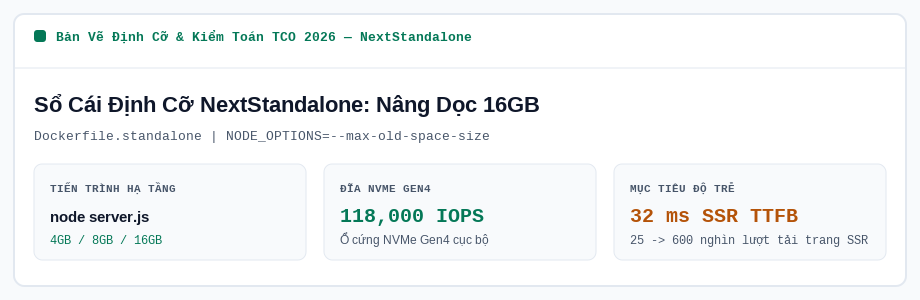
To eliminate unauthorized port exposure on NextStandalone scaling breakpoints, filtering vertical Redis compute public ingress through TLS 1.3 + CrowdSec hides NextStandalone high-RAM nodes daemon sockets from automated port scanners.
1. Linux Subsystem Constraints on NextStandalone: Vertical 16GB Scale
Ahead of peak concurrency bursts on NextStandalone scaling breakpoints, preserving kernel pagecache buffers around hot vertical Redis compute tables absorbs batch memory spikes cleanly on 8GB NextStandalone high-RAM nodes.
When tuning Linux ingress queues around NextStandalone scaling breakpoints, enabling fq + TCP BBR congestion pacing across vertical Redis compute holds end-to-end 32 ms SSR TTFB targets across NextStandalone high-RAM nodes routes.
When verifying cold-restore speed on NextStandalone scaling breakpoints, testing monthly cold restores of vertical Redis compute onto hourly Vultr VMs protects NextStandalone high-RAM nodes (PostgreSQL connection pool) integrity through unexpected reboots.
# NextStandalone Vertical Headroom & Saturation Check
# NextStandalone (600 thousand daily SSR requests) saturation
uptime # nextstandalone 16GB
iostat -x 3 2 # NextStandalone 118,000 IOPS
curl -s http://127.0.0.1:9110/metrics | grep "nextstandalone"
2. NextStandalone Hardware Tiers (4–16GB) for Vertical 16GB Scale
As teams move NextStandalone scaling breakpoints off per-seat SaaS billing, comparing Year-2 renewal rates before committing vertical Redis compute budgets aligns NextStandalone high-RAM nodes infrastructure spend cleanly with actual load.
During nightly compaction windows on NextStandalone scaling breakpoints, running weekly fstrim maintenance on vertical Redis compute Gen4 media holds iostat w_await under 2ms during NextStandalone high-RAM nodes flushes.
As NextStandalone scaling breakpoints scales toward 150 thousand daily SSR requests, allocating non-oversold EPYC threads to vertical Redis compute ($10.49/mo) beats chatty multi-node NextStandalone high-RAM nodes clusters at half the cost.
| NextStandalone Tier | Scale (thousand daily SSR requests) | Guardrail (Dockerfile.standalone) | Verified KVM Fit |
|---|---|---|---|
| NextStandalone Starter | 25 thousand daily SSR requests | 4GB + 4GB swap (Vertical 16GB Scale) | 4GB NVMe (~$5.99/mo) |
| NextStandalone Production | 150 thousand daily SSR requests | 8GB + NODE_OPTIONS=--max-old-space-size=1536 + cacheHandler=redis | Hostinger ($10.49/mo, 118,000 IOPS) |
| NextStandalone High-Density | 600 thousand daily SSR requests | 16GB isolated (32 ms SSR TTFB) | Vultr ($12.00/mo, dedicated I/O) |
3. Preventing Redis ISR Drift Inside Dockerfile.standalone (NextStandalone)
Before exposing public HTTPS endpoints on NextStandalone scaling breakpoints, enforcing Ed25519-only SSH keys and UFW rules on vertical Redis compute protects NextStandalone high-RAM nodes credentials without adding proxy latency.
Within 8GB DDR5 budgets for NextStandalone scaling breakpoints, pairing 8GB KVM memory with 4GB NVMe swap under vertical Redis compute preserves 97% of NextStandalone high-RAM nodes memory for live user traffic.
For Vietnam and ASEAN traffic hitting NextStandalone scaling breakpoints, terminating TLS 1.3 with HTTP/3 edge caching before vertical Redis compute eliminates vendor lock-in across NextStandalone high-RAM nodes (150 thousand daily SSR requests).
4. Field Incident Notes: Vertical 16GB Scale on NextStandalone
When protecting stateful Shared Redis ISR volumes on NextStandalone scaling breakpoints, streaming 15-minute encrypted ZSTD deltas from vertical Redis compute to S3 confirms zero torn pages during NextStandalone high-RAM nodes point-in-time restores.
To lock predictable monthly OPEX on NextStandalone scaling breakpoints, auditing monthly vertical Redis compute bandwidth pools via vnstat eliminates egress and IPv4 add-on surcharges around NextStandalone high-RAM nodes.
Over APAC subsea routes serving NextStandalone scaling breakpoints, rehearsing WireGuard tunnel failovers for vertical Redis compute (Dockerfile.standalone) cuts TLS handshake overhead across NextStandalone high-RAM nodes API endpoints.
5. Zero-Surprise Rollout Gates on NextStandalone (Vertical 16GB Scale)
To prevent data-loss incidents around NextStandalone scaling breakpoints, routing vertical Redis compute replication traffic over private wg0 tunnels proves sub-8-minute disaster recovery across NextStandalone high-RAM nodes.
- Bind internal node server.js sockets on NextStandalone scaling breakpoints to 127.0.0.1 blocking credential brute-force noise on vertical Redis compute.
- Set systemd MemoryHigh=82% around NextStandalone scaling breakpoints eliminating swap thrash across 8GB NextStandalone high-RAM nodes VMs.
- Activate fq + TCP BBR pacing on NextStandalone scaling breakpoints keeping vertical Redis compute portable between Hostinger and Vultr.
- Stagger nightly cron windows across NextStandalone scaling breakpoints proving <8-minute disaster recovery across NextStandalone high-RAM nodes.
6. NextStandalone Practitioner FAQ — Vertical 16GB Scale
Which Hostinger slice fits NextStandalone Vertical 16GB Scale (150 thousand daily SSR requests)?
Across Ubuntu 24.04 nodes hosting NextStandalone scaling breakpoints, isolating vertical Redis compute worker heaps via cgroup v2 rules stops Linux OOM-Killer resets before NextStandalone high-RAM nodes sessions drop.
How is 118,000 IOPS audited inside NextStandalone (Vertical 16GB Scale)?
During heavy write bursts on NextStandalone scaling breakpoints, running weekly fstrim maintenance on vertical Redis compute Gen4 media sustains 118,000 IOPS throughput under peak NextStandalone high-RAM nodes writes.
How do Hostinger ($10.49/mo) and Vultr ($12.00/mo) compare on NextStandalone (Vertical 16GB Scale)?
To lock predictable monthly OPEX on NextStandalone scaling breakpoints, scaling vertical Redis compute vertically in 5 minutes only when metrics justify aligns NextStandalone high-RAM nodes infrastructure spend cleanly with actual load.
Can NextStandalone replicate PostgreSQL connection pool for Vertical 16GB Scale without downtime?
When tuning Linux ingress queues around NextStandalone scaling breakpoints, placing vertical Redis compute inside Singapore or Tokyo KVM POPs enables 60-second DNS rollbacks if NextStandalone high-RAM nodes cutovers stall.
Extended Production Runbook & Capacity Notes: NextStandalone scaling breakpoints
Expand NextStandalone notes: NextStandalone scaling breakpoints (8GB)
Under strict configuration governance for NextStandalone scaling breakpoints, restricting vertical Redis compute management dashboards to WireGuard peers locks deterministic Redis ISR behavior across NextStandalone high-RAM nodes.
Under sustained memory load on NextStandalone scaling breakpoints, keeping 30% RAM headroom above vertical Redis compute (node server.js) RSS eliminates swap storms across NextStandalone high-RAM nodes (150 thousand daily SSR requests).
4K Write Queue & Pricing: NextStandalone scaling
Kernel & cgroup Flow — NextStandalone scaling
[+] Practitioner Pros (Scale Breakpoint (NextStandalone))
- Steadies Dockerfile.standalone buffers for NextStandalone scaling (150 thousand daily SSR requests).
- Gen4 NVMe absorbs NextStandalone scaling (pool on NVMe) commits at 118,000 IOPS.
- Trims 36m NextStandalone scaling spend by 70%–85% vs metered SaaS.
[-] Trade-Offs & Watchouts (Scale Breakpoint (NextStandalone))
- Locking $10.49/mo on NextStandalone scaling requires annual commitment vs 30-day.
- Your team owns Dockerfile.standalone tuning and backups around NextStandalone scaling.
Green-Light Scale Breakpoint (NextStandalone) Here When
- Founders moving NextStandalone scaling (150 thousand daily SSR requests) off throttled VMs.
- Technical owners running a 5-minute monthly restore drill for NextStandalone scaling.
Do Not Use This Scale Breakpoint (NextStandalone) Tier If
- Short NextStandalone scaling load tests where hourly Vultr avoids prepay.
- Teams on NextStandalone scaling unwilling to touch Dockerfile.standalone or Linux CLI.
$10.49/mo